Chengdu
2026-07-25
The trip actually took place from May 22 to 24. My friend and her husband held a small gathering with friends and family in Chengdu, and I was invited. Since we hadn't seen each other for a long time, I decided to fly there and spend some time with them. It was a warm and lovely gathering, and I was really happy to be there. Besides the gathering, there are a few other things I'd like to remember:
1) Laoma Tihua
On the evening I arrived, I had Laoma Tihua, a famous Chengdu dish made with tender pig trotters in a rich white broth. It was delicious. The chili dipping sauce was quite spicy, but the spicier it got, the more I wanted to eat.
2) Wuhou Shrine
I visited Wuhou Shrine, a place dedicated to Zhuge Liang and Liu Bei, two of the most iconic figures from China's Three Kingdoms period (220–280 AD).
Both Zhuge Liang and Liu Bei are central figures in Romance of the Three Kingdoms, one of China's most famous classical novels. The novel was based partly on historical records such as Records of the Three Kingdoms (Sanguozhi), while also blending historical events with legends and literary imagination.
Recently, I became fascinated by the TV adaptation of Romance of the Three Kingdoms, and I really wanted to pay my respects to Zhuge Liang.
In the novel, Zhuge Liang is portrayed as a brilliant strategist, almost like a legendary figure. He devoted his entire life to the Kingdom of Shu and worked tirelessly until his final days. His dedication and loyalty are deeply touching.
Whenever people talk about Zhuge Liang's teachings on self-cultivation, his famous words from The Admonition to My Son come to mind:
"A noble person cultivates their character through tranquility and nurtures virtue through simplicity. Without detachment from worldly desires, one cannot clarify one's aspirations; without inner peace, one cannot achieve far-reaching goals."
夫君子之行,静以修身,俭以养德。 非淡泊无以明志,非宁静无以致远。
I also saw the famous "Gongxin" couplet (攻心联), a later inscription inspired by Zhuge Liang's approach to governance — winning people's hearts rather than relying only on force:
"Win people's hearts, and opposition will naturally disappear; throughout history, those who truly understood warfare were never eager for war.
Fail to understand the situation, and both leniency and strictness can lead to mistakes; those who govern Shu in the future must think deeply."
能攻心则反侧自消,从古知兵非好战; 不审势即宽严皆误,后来治蜀要深思。
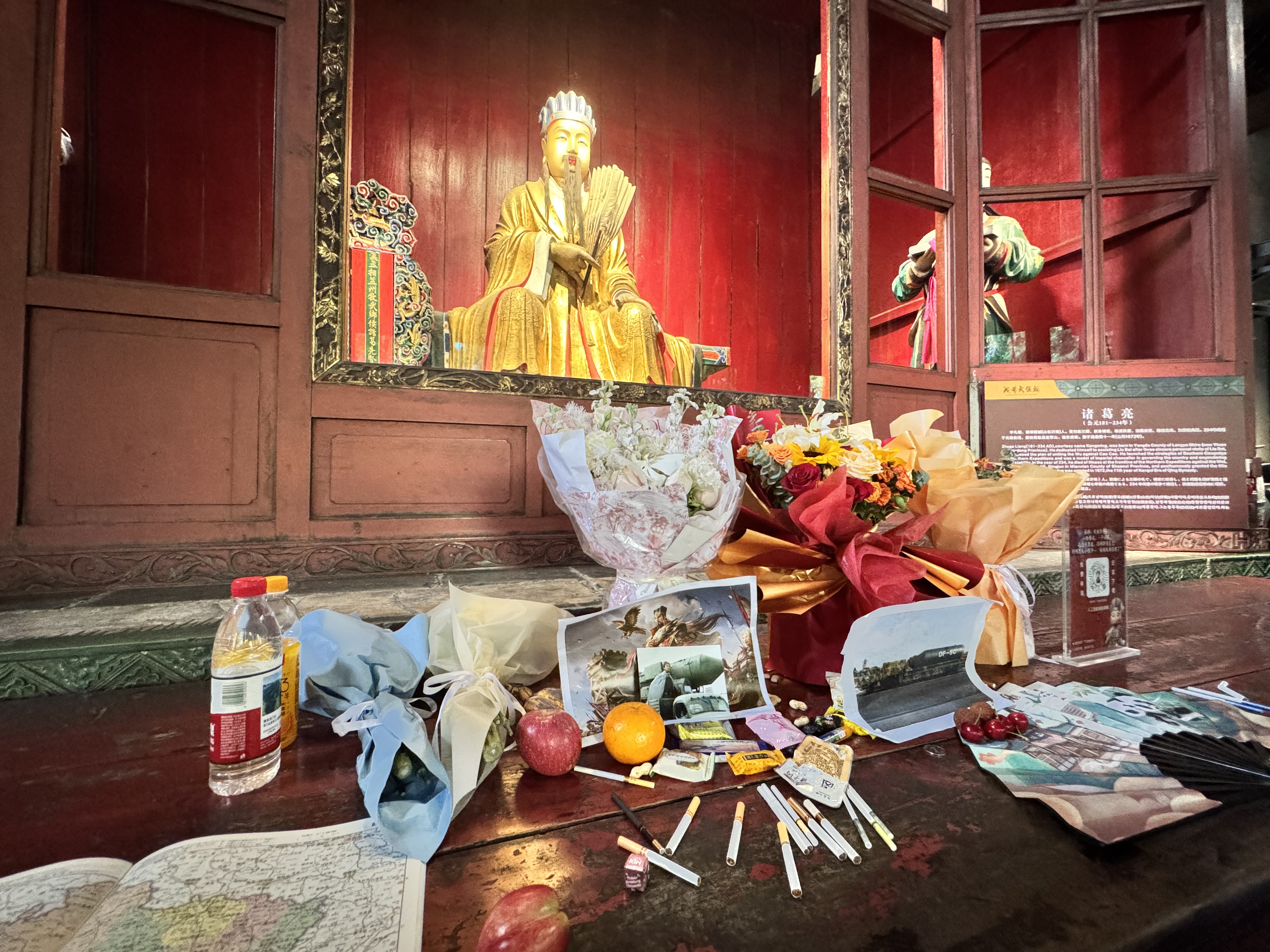
What surprised me was seeing so many visitors leave cigarettes as offerings to Zhuge Liang — something I had never expected. Some visitors even brought a humorous edited image showing Zhuge Liang alongside a Dongfeng (East Wind) missile, playfully referencing his legendary strategy of “borrowing the east wind” in Romance of the Three Kingdoms.
3) Parks in Chengdu
I also visited Baihuatan (百花潭) Park and Huanhuaxi (浣花溪) Park.
I really love the names of these two parks. Baihuatan literally means "a pool surrounded by many flowers," creating a beautiful image of flowers reflected in the water. Huanhuaxi is a poetic name associated with local legends and the cultural landscape surrounding Du Fu Thatched Cottage, one of Chengdu’s most cherished literary landmarks.
What I love about Chengdu's parks is their unique charm — they are not just scenic places, but also spaces filled with everyday life. People drink tea, chat with friends, walk slowly, and enjoy peaceful moments there.
I really love Chengdu's Three Kingdoms heritage and the poetic atmosphere surrounding Du Fu Thatched Cottage.
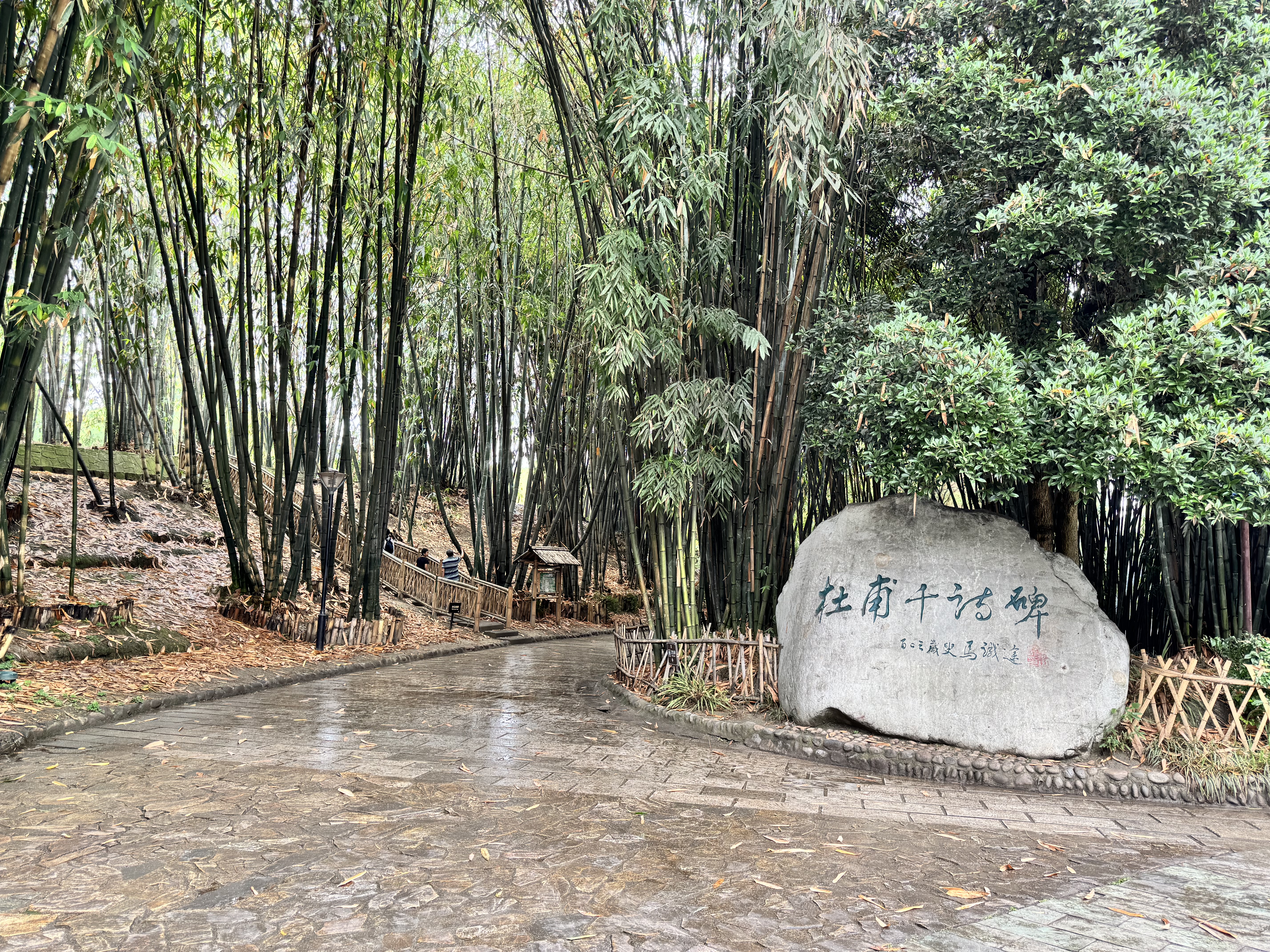 scene from Huanhuaxi Park (浣花溪公园)